How I Choose Which Podcast Moments Are Worth Repurposing
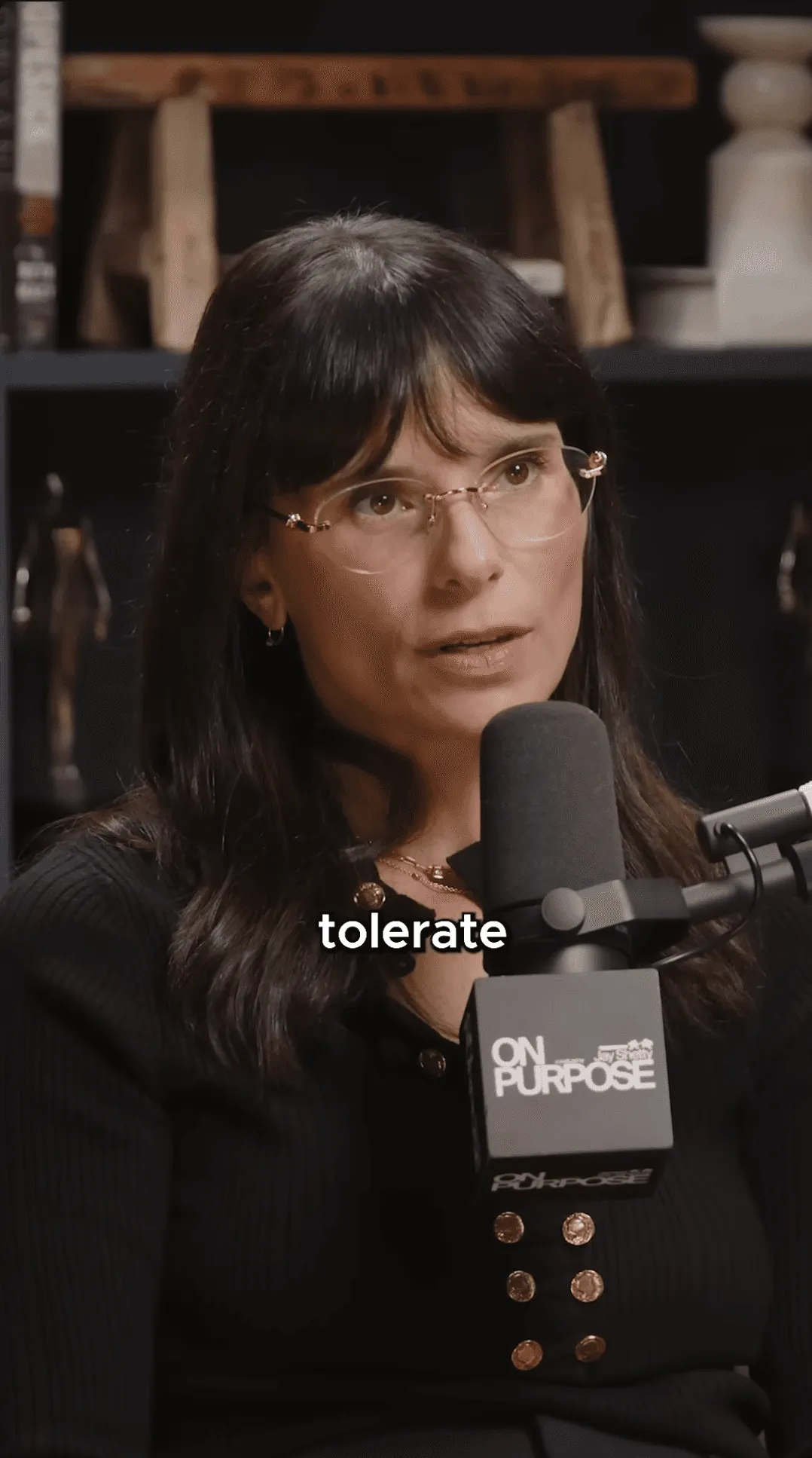
A strong podcast moment gives the viewer enough context to understand the point without hearing the full conversation. It has a clear subject, a claim or instruction, and a conclusion that lands. A person should not need an unseen question, an earlier story, or the guest’s biography to make sense of it. In my repurposing system, useful clips are self-contained insights that feel complete and valuable on their own. I also mark strong opening statements, direct takes, tactical advice, and compelling questions during the recording review. Those criteria are more useful than selecting a moment because the speaker sounded energetic. Read the transcript around the candidate. If the idea starts before the clip window, move the start earlier. If the conclusion appears later, extend the end. If the complete thought becomes too dependent on the rest of the episode, keep it inside the long-form asset. Some of the best moments begin with a clean sentence that names the problem. Others begin with a surprising decision or a direct answer. The form can change. The requirement for a complete thought does not.

Your Podcast Doesn't Need More Clips. It Needs Better Clips.
Most podcasts don't have a content problem.
They have a selection problem.
A founder records a 60-minute podcast.
Then the team says:
"Let's make 20 reels from it."
Sounds productive.
But here's the problem:
You can easily make 20 videos from a podcast.
That doesn't mean you have 20 good videos.
Some clips need too much context.
Some take 30 seconds to get to the actual point.
Some are interesting, but have nothing to do with what your ideal customer cares about.
And some only sound good because you've heard the entire conversation.
So instead of asking:
"How many clips can we make?"
Start asking:
"Which moments are actually worth turning into content?"
Here's the system I use.
1. Find the idea before you find the edit
Don't open Premiere Pro and start cutting randomly.
First, find the strongest ideas inside the conversation.
Look for moments where the speaker:
Shares a strong opinion
Explains how they solved a problem
Makes a surprising claim
Reveals a mistake
Gives specific advice
Explains a process
Answers a question
Shares a result or lesson
For example:
"We struggled to get clients until we stopped doing X."
That's a potential content idea.
Compare that with:
"So yeah, marketing has been interesting for us..."
That's probably not.
The difference isn't editing.
It's the idea.
2. Don't confuse a topic with a content idea
This is one of the biggest mistakes I see.
"Marketing" isn't a content idea.
"Sales" isn't a content idea.
"Leadership" isn't a content idea.
They're topics.
A useful content idea is specific.
Instead of:
"How to improve your marketing"
Try:
"Why posting more content won't fix a weak offer."
Instead of:
"How I built my agency"
Try:
"The $10k/month mistake I made when building my agency."
Specific ideas are easier to package.
They're easier to understand.
And they're much easier to turn into a good short-form video.
3. Use the 10-second context test
Here's a simple test you can use today.
Take a potential clip.
Give it to someone who hasn't watched the podcast.
Don't explain anything.
Ask them:
"What is this person talking about?"
If they can't answer, you've got a context problem.
Look for phrases like:
"Like I said earlier..."
"As we discussed..."
"That strategy..."
"He..."
"They..."
"This..."
These often mean the clip depends on something that happened before it.
Sometimes you can fix it by extending the clip.
Sometimes you need to rewrite the on-screen context.
And sometimes?
Just don't use the clip.
Not every moment needs to become a reel.
4. Match the clip to a real customer problem
This is where content starts becoming useful for the business.
Before approving a clip, ask:
"Would my ideal customer actually care about this?"
Don't guess.
Go to your:
Sales calls
DMs
Comments
Client calls
Reddit discussions
Support tickets
Reviews
Community conversations
Find the questions people repeatedly ask.
Then search your podcast transcripts for moments that answer them.
Now you have a much stronger content system.
You're not creating random "value content."
You're answering questions your market already has.
5. Use AI to find the good moments faster
You don't need AI to write your entire content strategy.
Use it for the boring parts.
Here's a prompt you can copy:
PROMPT #1: PODCAST CLIP FINDER
"Act as a senior content strategist.
I am going to give you a podcast transcript.
Find the 10 strongest moments that could become short-form videos.
For every moment, give me:
Timestamp
The exact idea being discussed
The core lesson
Who would care about it
Why it could work as short-form content
The strongest opening sentence
What context is required
A score from 1-10
Do NOT choose a moment just because it sounds entertaining.
Prioritize:
Strong opinions
Specific lessons
Contrarian ideas
Mistakes
Stories with a lesson
Tactical advice
Surprising insights
Buyer problems
Reject anything that requires too much context."
6. Then use AI to pressure-test your clips
Once you've selected your clips, don't immediately send everything to your editor.
Run them through another filter.
PROMPT #2: CLIP QUALITY CHECK
"Review this podcast clip as a short-form content strategist.
Score it from 1-10 on:
Hook
Clarity
Context
Specificity
Audience relevance
Curiosity
Payoff
Retention potential
Then answer:
Would someone who has never seen this podcast understand it?
Is there one clear idea?
Is the opening strong enough?
Is there unnecessary setup?
Is the ending satisfying?
Is this useful to the target audience?
Give me specific changes.
Do not rewrite the speaker's meaning.
The goal is to make the idea easier to consume, not invent a different idea."
7. Give your editor a brief, not a 60-minute video
This is where a lot of teams waste time.
Don't tell your editor:
"Here's the podcast. Find some viral clips."
That's not an editing brief.
Give them:
Clip: 03:42-04:31
Idea: Why posting more won't fix a weak offer
Audience: SaaS founders
Main takeaway: Distribution can't compensate for poor positioning
Hook: Start at "Posting more isn't going to fix this..."
Editing direction: Fast pacing, clean captions, supporting B-roll, visual emphasis on key phrases
CTA: Follow for more content strategy
Now your editor knows exactly what they're trying to communicate.
They can spend their time making the video better instead of trying to figure out what the video is supposed to be about.
8. Here's the workflow I'd use
Don't overcomplicate it.
Use this:
RECORD
↓
TRANSCRIBE
↓
FIND THE BEST IDEAS
↓
SCORE THE MOMENTS
↓
SELECT 5-10
↓
WRITE THE EDITING BRIEF
↓
EDIT
↓
QA
↓
PUBLISH
↓
TRACK PERFORMANCE
↓
FEED WINNERS BACK INTO THE SYSTEM
That's a content system.
Not:
"Record podcast → make random reels."
9. Your editor should improve the presentation, not change the message
This is important.
Good editing can:
→ Remove dead space
→ Tighten the pacing
→ Add captions
→ Highlight important words
→ Add relevant B-roll
→ Create visual pattern interrupts
→ Improve the first few seconds
→ Make the story easier to follow
But the editor shouldn't turn:
"I think this can work in certain situations"
into:
"This ALWAYS works."
That's not editing.
That's changing the claim.
The best edit makes the idea easier to consume without changing what the person actually meant.
10. Build a content library
Don't let your best ideas disappear after one post.
Create a simple database.
Track:
Topic
Problem
Podcast
Timestamp
Clip
Hook
Platform
Status
Views
Engagement
Leads
Performance notes
Now imagine you have 30 podcasts sitting inside this system.
You don't just have 30 videos.
You have hundreds of potential content ideas.
And when one topic starts performing?
You know exactly where to go for more.
BONUS: My simple content scoring system
Before sending a clip to your editor, score it out of 10.
Clarity: /10
Can someone understand it immediately?
Specificity: /10
Is there a concrete idea rather than generic advice?
Relevance: /10
Does your target audience care?
Curiosity: /10
Does it make someone want to keep watching?
Payoff: /10
Does the viewer actually get something at the end?
Context: /10
Can it stand alone?
If the average is below 7?
I wouldn't edit it.
I'd go back to the podcast and find something better.
Your action plan for today
If you have a podcast sitting on your hard drive right now, do this:
Step 1
Get the transcript.
Step 2
Run it through the Podcast Clip Finder prompt above.
Step 3
Take the best 10 moments.
Step 4
Run those through the Clip Quality Check.
Step 5
Keep the best 5.
Step 6
Create an editing brief for each one.
Step 7
Send them to your editor.
Step 8
Track which clips actually perform.
Step 9
Study the winners.
Step 10
Use those patterns when selecting clips from your next podcast.
Do this for 10 episodes and you'll start seeing patterns.
You'll know what topics your audience responds to.
You'll know which hooks work.
You'll know which stories create conversations.
And eventually, you'll stop guessing what to post.
And if you don't want to build the editing team yourself...
This is exactly what we help founders with at Veloifs.
You give us the raw podcast.
We handle the heavy lifting:
Moment selection → Editing → Captions → B-roll → Visual storytelling → QA → Final delivery
So you can spend your time recording and running the business instead of spending hours inside an editing timeline.
If you already have podcasts sitting on your hard drive, send me one.
I'll show you what I'd turn it into.
DM me "PODCAST" and I'll take a look.
The goal isn't to make more clips.
The goal is to make fewer, better clips that actually have a reason to exist.
That's the difference between repurposing content...
and building a content engine.
OTHER BLOGS






EVERY CREATOR HAS IDEAS. WE MAKE SURE YOURS REACH MILLIONS
VELOIFS